Back in 2015, a buyer named Sam Simpson closed on a house on Washington Street in Winchester. He read up on the city's building codes before he touched a hammer, then spent months finishing interior and exterior work on the place. What he hadn't checked was whether his street sat inside the Historic Winchester District, where a different rulebook applies. It did. When he finally stopped by the Planning and Zoning office to confirm his work was compliant, he learned that the vinyl replacement windows he'd already installed weren't allowed. He had to pull out 17 of 21 windows and put in wood, at an estimated cost of around $7,000.
That story is more than a decade old, but the rule that caused it hasn't changed, and neither has the pattern. If you're weighing a purchase or a sale inside Winchester's historic core, the number that matters most isn't the sale price on the listing. It's the approval clock and the materials list that come with owning a house someone else's committee has an opinion about.
The Bargain Everyone Notices, and the Reason It Exists
Ask a local appraiser about Old Town's older housing stock and you'll hear some version of the same thing. One Winchester appraisal firm describes turn-of-the-century homes in Old Town as "reasonably priced" properties that "turn hands often." That framing is accurate as far as it goes. A lot of buyers see a well-kept 1900s rowhouse priced in line with, or even below, a newer subdivision home nearby and assume they're getting a deal with no catch.
The catch isn't in the purchase price. It's in what happens the first time you want to change something a passerby can see. Any exterior alteration visible from a public street, walkway, or public space inside the Historic Winchester District has to be approved by the city, either through the Board of Architectural Review or a staff-level review, before work starts. That includes windows, siding, roofing, fences, additions, and full demolitions. It does not include most interior work, which is why the district's rules rarely show up in a home inspection report but show up fast the moment you pull a permit.
What Actually Triggers a Review
The city's own guidance draws a fairly clean line between what needs sign-off and what doesn't:
- Windows, doors, and their replacement materials
- Siding, trim, and exterior paint colors
- Roofing materials and rooflines
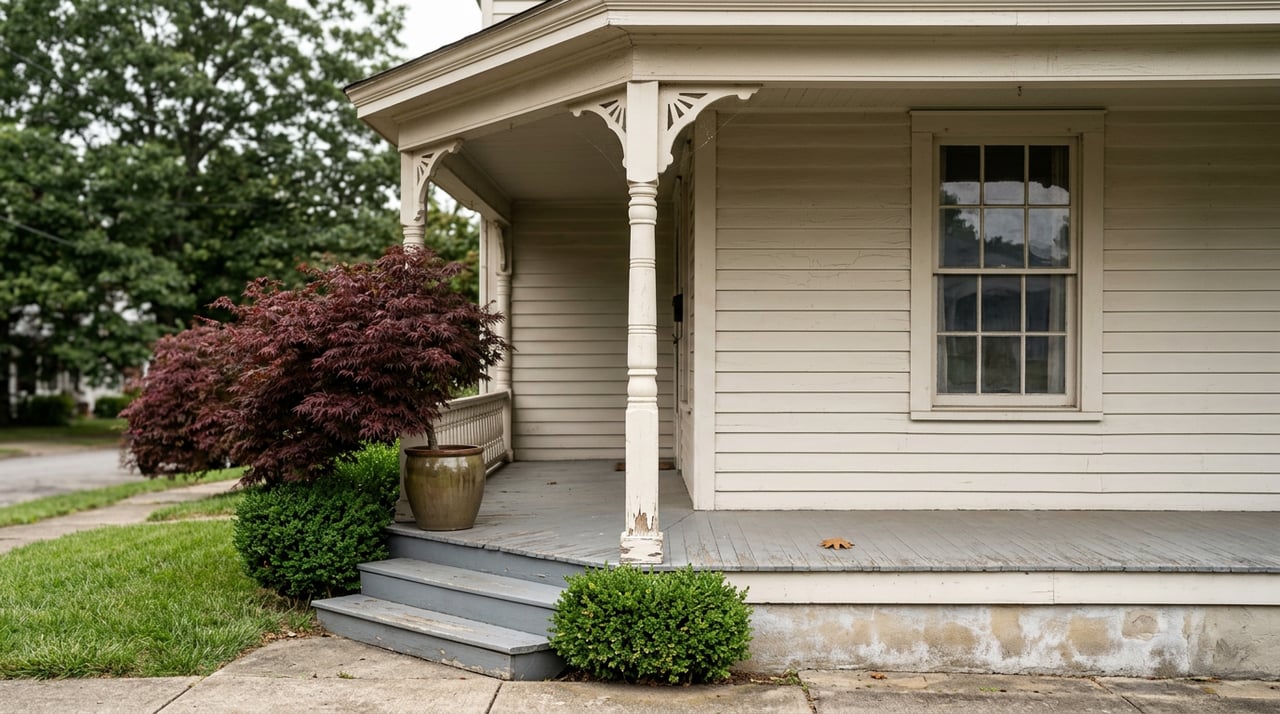
- Porches, railings, and decorative woodwork
- Fences, walls, and site work visible from the street
- Additions, new construction, and demolition
Interior renovations, mechanical upgrades, and anything not visible from a public right of way generally fall outside BAR's reach. That distinction matters for budgeting. A kitchen remodel behind existing walls moves at the pace of your contractor's schedule. A new front porch railing moves at the pace of a city meeting calendar.
The Calendar You're Actually Buying Into
The Board of Architectural Review meets twice a month, on the first and third Thursday at 4 p.m. in Council Chambers. Getting on the agenda has its own deadlines, and they're stricter for anything involving demolition.
| Application type | Deadline | Notes |
|---|---|---|
| Standard exterior work (windows, siding, fences, additions) | Complete application due by 5 p.m. the Monday 10 days before the meeting | Applicant or representative must attend |
| Demolition or work requiring a public hearing | Complete application due by 5 p.m. the Monday 24 days before the meeting | Extra time built in for public notification |
| Structures 75 years or older | Same deadlines as above | $300 filing fee applies |
Miss a Monday deadline and you're not delayed by a few days. You're delayed until the next meeting, roughly two weeks later, and if a public hearing is required, closer to a month. For a seller trying to close on a set date, or a buyer trying to finish a porch repair before winter, that math needs to be part of the offer, not a surprise that shows up after ratification.
Enforcement Cuts Both Ways
The district's rules aren't just a planning formality. A 2023 dispute in Winchester's Historic District made that clear when a property owner, John Megale, made exterior changes without approval and received a stop-work order from the city. The Board of Architectural Review initially let him keep the completed renovations, then reversed itself and rescinded approval of the new columns, while a separate disagreement over a fence stayed unresolved. Cases like this are exactly why a buyer's due diligence in this district should include a simple question nobody thinks to ask elsewhere: has anything on this house been changed without a BAR permit, and is that violation still open?
For sellers, the same question runs the other direction. Unpermitted exterior work discovered during a buyer's walk-through, or worse, during the city's own review after closing, can slow or sink a deal that was otherwise ready to go. Getting ahead of it before listing, rather than after an offer, is the difference between a manageable fix and a renegotiated contract.
The District Isn't Standing Still
None of this means Old Town is frozen in place. In June 2026, Winchester's Planning Commission approved a new Old Town Neighborhood Design District, a zoning tool built with input from Friends of Old Town, Preservation of Historic Winchester, the Board of Architectural Review, the Museum of the Shenandoah Valley, Shenandoah University, and several other local stakeholders. Unlike the city's other design districts, the Old Town version isn't pushing for large-scale renovation. It's aimed at compatible infill on underused surface parking lots and vacant buildings, wider sidewalks, and gateway features near the Piccadilly Street traffic circle that signal you're entering downtown.
The clearest example already in motion sits at 447 Amherst Street, the former Southern States property, vacant since February 2025 and purchased last year for $2.3 million by the nonprofit Winchester House II LLC, which is eyeing it for an apartment complex with a small rear park. That's real capital moving into the district under the same review structure that slowed down Sam Simpson's windows. The rules create friction, not paralysis.
What the Citywide Numbers Actually Hide
Over the three months ending May 2026, homes across Winchester sold at a median price of $373,000, down 4.6 percent from the same stretch a year earlier, and the average listing took 48 days to sell compared to 34 days the year before. A separate estimate of the city's typical home value puts the number closer to $359,500, up slightly over the past year. Those two figures don't match because they measure different things: one reflects actual closed sales, the other is a computed estimate across the entire housing stock. Neither one tells you anything about a 1900s rowhouse three blocks off the Loudoun Street mall, where inventory is thinner, renovation timelines are longer, and a chunk of the housing stock predates indoor plumbing.
That gap is the whole point. A citywide median is a starting point for a conversation, not a number you can apply to a specific property inside a 45-block National Register Historic District. Add in the practical costs of historic ownership, older wiring and plumbing that may need updating, specialized materials for windows and roofing, and insurance premiums that run higher for older construction (citywide averages for a standard $300,000 dwelling policy sat around $1,749 a year as of March 2026), and the real cost of an Old Town purchase looks different from what the listing price suggests.
If You're Buying in the District
- Ask whether the property is inside the historic boundary before you fall in love with the porch. Winchester's Historic Winchester District page is the place to confirm it.
- Request any records of past BAR applications or violations on the property, and don't assume a clean-looking exterior means a clean permit history.
- Budget renovation timelines in BAR meeting cycles, not contractor availability. Two meetings a month means your project moves at the city's pace for anything visible from the street.
- Line up an inspector and a contractor who've actually worked inside the district. Historic materials often need specialized sourcing that a standard renovation bid won't account for.
If You're Selling in the District
Get ahead of anything that was changed without approval, especially if you weren't the one who changed it. A previous owner's unpermitted fence or replacement window becomes your disclosure problem the moment a buyer's inspector notices it. Preservation of Historic Winchester keeps research files on many district properties and can help confirm a home's status before you list. If you've got exterior work planned before selling, submitting it early enough to clear BAR review before your listing goes live removes one more thing for a buyer's attorney to flag at the table.
A Few Questions Worth Settling Early
Does the district apply to interior remodeling? No. BAR review covers exterior changes visible from a public street or space. Interior work generally isn't reviewed.
What if my house looks newer, does it still count? Yes. The boundary is geographic, drawn around roughly 45 blocks in the district that stretches from around Germain Street north to North Avenue and takes in most of the Amherst Street corridor. A property's age or style doesn't exempt it if it sits inside that line.
How fast can I realistically get approval? For routine exterior work, plan on the standard 10-day application window ahead of the next BAR meeting. For anything involving demolition or a public hearing, plan on closer to a month.
Buying or selling inside Winchester's Historic District isn't harder because the houses are older. It's harder because the price tag and the paperwork tell two different stories, and most people only hear about the second one after they've already signed something. Marcy Smith works across the tri-state region including Winchester and can walk you through what a specific property's district status actually means for your timeline and your budget before you make an offer or list. Start with a look at current Winchester homes and neighborhood details, or reach out directly through Marcy's contact page to talk through your specific situation. Let's Connect.